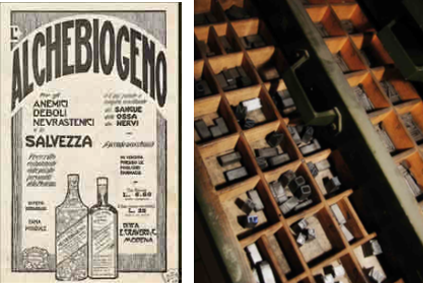
Founded on 6 March 1920 and since then our history has been a continuous growth in technology, expertise, quality standards and services.
Always up to date, we continuously invest in new technology to offer the most advanced printing solutions available worldwide.
The company was founded through an innovative workers’ buyout, when the employees of Tipografia Blondi & Parmeggiani purchased the business from their former owner.
It was 1919 and the initiative was soon joined by other printers from Modena and other eight local printing companies.
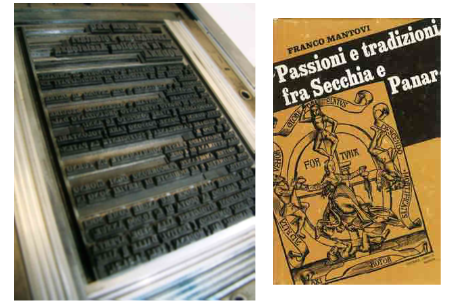
In February of the following year, the Constituent Assembly of the Cooperativa Tipografi Modenese was created. 90 members approved the Articles of Association and appointed the managers. The official registration— marking the formal birth of the company — is dated 6 March 1920.
During the Nazi-Fascist occupation, the Cooperative was confiscated by the German Military Command of Modena and used to print official notices and dispatches.
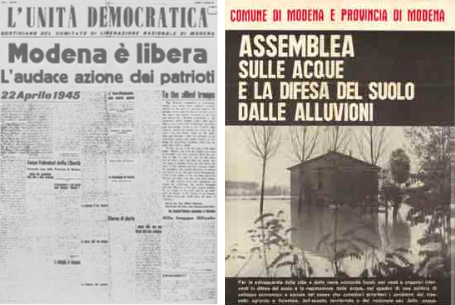
Despite this, some workers managed to hide the most advanced machinery, making it available to the resistance fighters together with paper and ink. On 22 April 1945, the liberation day of Modena, the printing house came under the control of the National Liberation Committee, which printed the first issue of the newspaper L’Unità Democratica. Its headline read: “Modena is free”.
With the return of freedom, business started again with renewed confidence in the future. After a period of economic and production stabilisation, the cooperative launched a technological renewal plan. In 1955, a new headquarters — finally owned by the company — was inaugurated.
During these years, Società Arti Grafiche Modenesi, later Poligrafica Emiliana, also began operations. Its international market presence would later become one of the strengths of what would become Coptip after 1979.
The need to establish a modern and competitive production hub brought Cooptip closer to Poligrafica Emiliana. The project involved a deep reorganisation of work processes with an ambitious restructuring plan.
The merger proposal was approved and on 1 January 1979 the new company was established, retaining the name Cooptip. Poligrafica Emiliana contributed its international market, new offset machinery, and a strong entrepreneurial and innovative spirit, which combined with the decades-long typographic expertise of the historic Cooperative.
In the 1980s, the traditional typographic market declined rapidly, while consumer advertising boomed. As the offset printing market continues to grow, innovative solutions are essential to remain competitive.
The transition to colour lithographic printing machines — capable of printing larger formats with higher quality — marked the offset revolution. This was an important step for Cooptip, which began to print in CMYK.
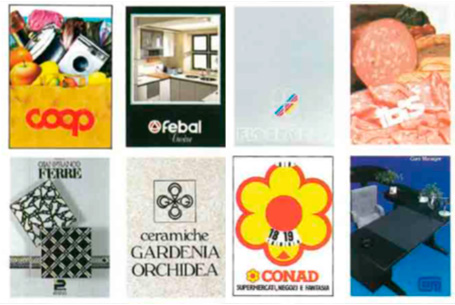
The new weboffset machines opened doors to emerging markets: ceramics and furnishing requiring high-quality colour catalogues.
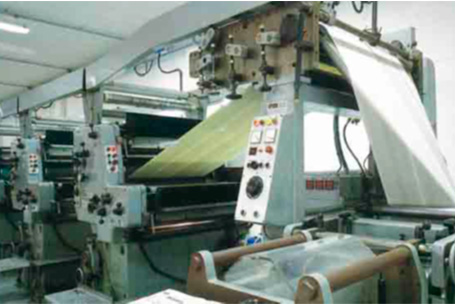
Dynamism, foresight and adaptability shaped the success of Coptip. During these years, the company installed its first web offset press — a major investment in advanced technology and processes that strengthened its position in core markets and enabled expansion into the Tour Operator and Large-Scale Retail (GDO) sectors.
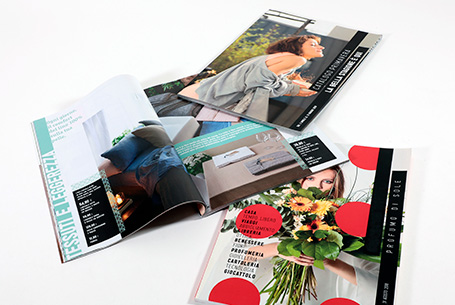
Between the late 1980s and early 1990s, catalogues for Large-Scale Retail became the core of Coptip’s revenue. This marked a further evolution: from industrial catalogues printed in 15.000–20.000 copies to retail catalogues printed in hundreds of thousands of copies with high pagination and fast delivery times.
In 1986, Cooptip changed its name to Coptip Industrie Grafiche and inaugurated its new facility in Via Gran Bretagna, the company headquarter.
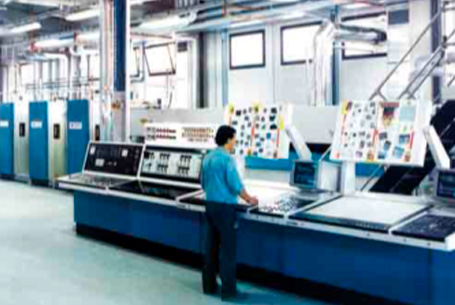
Profits were systematically reinvested in continuous innovation. By the mid-1990s, Coptip has the full control of its production chain, including prepress, sheet-fed and weboffset printing, stitching, labelling and cellophane wrapping.
The introduction of CTP (Computer-to-Plate) technology allows files to be transferred directly onto the plate, eliminating the need for film output.
The advent of the internet further has further accelerated production processes, enabling constant clients collaboration; customer can upload print-ready files and approve digital proofs in real time.
At the beginning of the 21st century, the printing sector began to show signs of slowdown as communication increasingly shifted to television and digital media.
Coptip responded with a modern programme to sustain growth. Between 2001 and 2006, all weboffset printing machines were replaced with new-generation systems: a Koenig & Bauer Compacta 618 offset press with 48-page output and two 64-page MAN Roland web presses. At the same time, production processes has a comprehensive renewal.
Despite the Great Recession of 2007–2013, Coptip successfully retained its customer base expanded its presence in the Large-Scale Retail (GDO) sector, maintaining good revenues.
Contrary to the general market trend, the company recruited new employees and invested in advanced technologies: installing a new 80-page MAN Roland web press with 45.000 revolutions/per hour, two LGV shuttles for automated pallet handling, an automated waste-copy sorting system with the elimination of isopropyl alcohol, as well as a photovoltaic plant and a trigeneration system.
The company’s progressive focus on the Large-Scale Retail sector opened the doors to Southern European markets. Coptip began competing with leading continental printers, building relationships and sharing expertise, innovation and a new international vision.
At the same time, to meet the increasingly tight turnaround times required by the retail sector, the company further upgraded its production structure in terms of speed and flexibility. Versatility became a new core value, while a corporate culture based on proactivity and problem-solving turned into a key success factor.
Customer service was significantly strengthened: 24/7 availability, six days a week; a wide range of pagination and format options; and new printing technologies allowing last-minute modifications to print-ready files while maximising the impact of commercial messages.
Daily collaboration and strong partnerships between Coptip’s operational and technical teams, retail clients and supply chain partners — from creative and layout agencies to distributors — enable the company to guide, optimise and accelerate the entire process, without delays and managing any unforeseen issues.
Alongside consolidating its leadership in retail printing, Coptip broadened its offering.
In 2014, the company acquired a new company in Modena specialized in labels and packaging. In 2015, it completed the merger by incorporation of Nuova Grafica, a cooperative from Carpi specialised in high-quality printed products.
The two companies were integrated into a single industrial complex named FORMAGRAFICA Srl. This operation enabled Coptip to enter new markets and acquire additional expertise in packaging. However, as the conditions were not yet in place for stable integration of this new segment, after relaunching its commercial development, Formagrafica Srl was subsequently divested.
In 2018, Coptip reaffirmed its innovative spirit with a major investment of €17 million — equivalent to 40% of its annual turnover.
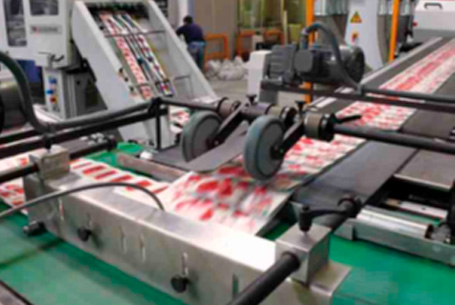
The company installed the largest web offset printing machine in Southern Europe: a MAN Lithoman R80, representing the most advanced technology offered by the German leader in offset web presses.
With a revolution of 180.000 copies per hour, format versatility, pagination from 8 to 96 pages and maximum print quality combined with reduced costs and lead times, this printing machine — together with Coptip flexibility — guarantees fast, high-volume production of catalogues for organised and large-scale retail.
Thanks to this investment, Coptip consolidated its leadership in the Italian market and expanded into the broader European market, acquiring additional major clients.
In 2023, together with CCM (Coop Cartai Modenese), Coptip acquired CARTEX Srl, a company specialising in the production of over 130 million folding cartons and paperboard boxes for food, beauty and beverage sectors.
It is the latest challenge for a company that, since 1920, has never stopped printing and innovating.
Founded on 6 March 1920 and since then our history has been a continuous growth in technology, expertise, quality standards and services. Always up to date, we continuously invest in new technology to offer the most advanced printing solutions available worldwide.
The company was founded through an innovative workers’ buyout, when the employees of Tipografia Blondi & Parmeggiani purchased the business from their former owner.
It was 1919 and the initiative was soon joined by other printers from Modena and other eight local printing companies.
In February of the following year, the Constituent Assembly of the Cooperativa Tipografi Modenese was created. 90 members approved the Articles of Association and appointed the managers. The official registration— marking the formal birth of the company — is dated 6 March 1920.
During the Nazi-Fascist occupation, the Cooperative was confiscated by the German Military Command of Modena and used to print official notices and dispatches.
Despite this, some workers managed to hide the most advanced machinery, making it available to the resistance fighters together with paper and ink. On 22 April 1945, the liberation day of Modena, the printing house came under the control of the National Liberation Committee, which printed the first issue of the newspaper L’Unità Democratica. Its headline read: “Modena is free”.
With the return of freedom, business started again with renewed confidence in the future. After a period of economic and production stabilisation, the cooperative launched a technological renewal plan. In 1955, a new headquarters — finally owned by the company — was inaugurated.
During these years, Società Arti Grafiche Modenesi, later Poligrafica Emiliana, also began operations. Its international market presence would later become one of the strengths of what would become Coptip after 1979.
The need to establish a modern and competitive production hub brought Cooptip closer to Poligrafica Emiliana. The project involved a deep reorganisation of work processes with an ambitious restructuring plan.
The merger proposal was approved and on 1 January 1979 the new company was established, retaining the name Cooptip. Poligrafica Emiliana contributed its international market, new offset machinery, and a strong entrepreneurial and innovative spirit, which combined with the decades-long typographic expertise of the historic Cooperative.
In the 1980s, the traditional typographic market declined rapidly, while consumer advertising boomed. As the offset printing market continues to grow, innovative solutions are essential to remain competitive.
The transition to colour lithographic printing machines — capable of printing larger formats with higher quality — marked the offset revolution. This was an important step for Cooptip, which began to print in CMYK.
The new weboffset machines opened doors to emerging markets: ceramics and furnishing requiring high-quality colour catalogues.
Dynamism, foresight and adaptability shaped the success of Coptip. During these years, the company installed its first web offset press — a major investment in advanced technology and processes that strengthened its position in core markets and enabled expansion into the Tour Operator and Large-Scale Retail (GDO) sectors.
Between the late 1980s and early 1990s, catalogues for Large-Scale Retail became the core of Coptip’s revenue. This marked a further evolution: from industrial catalogues printed in 15.000–20.000 copies to retail catalogues printed in hundreds of thousands of copies with high pagination and fast delivery times.
In 1986, Cooptip changed its name to Coptip Industrie Grafiche and inaugurated its new facility in Via Gran Bretagna, the company headquarter.
Profits were systematically reinvested in continuous innovation. By the mid-1990s, Coptip has the full control of its production chain, including prepress, sheet-fed and weboffset printing, stitching, labelling and cellophane wrapping.
The introduction of CTP (Computer-to-Plate) technology allows files to be transferred directly onto the plate, eliminating the need for film output.
The advent of the internet further has further accelerated production processes, enabling constant clients collaboration; customer can upload print-ready files and approve digital proofs in real time.
At the beginning of the 21st century, the printing sector began to show signs of slowdown as communication increasingly shifted to television and digital media.
Coptip responded with a modern programme to sustain growth. Between 2001 and 2006, all weboffset printing machines were replaced with new-generation systems: a Koenig & Bauer Compacta 618 offset press with 48-page output and two 64-page MAN Roland web presses. At the same time, production processes has a comprehensive renewal.
Despite the Great Recession of 2007–2013, Coptip successfully retained its customer base expanded its presence in the Large-Scale Retail (GDO) sector, maintaining good revenues.
Contrary to the general market trend, the company recruited new employees and invested in advanced technologies: installing a new 80-page MAN Roland web press with 45.000 revolutions/per hour, two LGV shuttles for automated pallet handling, an automated waste-copy sorting system with the elimination of isopropyl alcohol, as well as a photovoltaic plant and a trigeneration system.
The company’s progressive focus on the Large-Scale Retail sector opened the doors to Southern European markets. Coptip began competing with leading continental printers, building relationships and sharing expertise, innovation and a new international vision.
At the same time, to meet the increasingly tight turnaround times required by the retail sector, the company further upgraded its production structure in terms of speed and flexibility. Versatility became a new core value, while a corporate culture based on proactivity and problem-solving turned into a key success factor.
Customer service was significantly strengthened: 24/7 availability, six days a week; a wide range of pagination and format options; and new printing technologies allowing last-minute modifications to print-ready files while maximising the impact of commercial messages.
Daily collaboration and strong partnerships between Coptip’s operational and technical teams, retail clients and supply chain partners — from creative and layout agencies to distributors — enable the company to guide, optimise and accelerate the entire process, without delays and managing any unforeseen issues.
Alongside consolidating its leadership in retail printing, Coptip broadened its offering.
In 2014, the company acquired a new company in Modena specialized in labels and packaging. In 2015, it completed the merger by incorporation of Nuova Grafica, a cooperative from Carpi specialised in high-quality printed products.
The two companies were integrated into a single industrial complex named FORMAGRAFICA Srl. This operation enabled Coptip to enter new markets and acquire additional expertise in packaging. However, as the conditions were not yet in place for stable integration of this new segment, after relaunching its commercial development, Formagrafica Srl was subsequently divested.
In 2018, Coptip reaffirmed its innovative spirit with a major investment of €17 million — equivalent to 40% of its annual turnover.
The company installed the largest web offset printing machine in Southern Europe: a MAN Lithoman R80, representing the most advanced technology offered by the German leader in offset web presses.
With a revolution of 180.000 copies per hour, format versatility, pagination from 8 to 96 pages and maximum print quality combined with reduced costs and lead times, this printing machine — together with Coptip flexibility — guarantees fast, high-volume production of catalogues for organised and large-scale retail.
Thanks to this investment, Coptip consolidated its leadership in the Italian market and expanded into the broader European market, acquiring additional major clients.
In 2023, together with CCM (Coop Cartai Modenese), Coptip acquired CARTEX Srl, a company specialising in the production of over 130 million folding cartons and paperboard boxes for food, beauty and beverage sectors.
It is the latest challenge for a company that, since 1920, has never stopped printing and innovating.